888-354-0291 740-622-3307
111 North 14th St • PO Box 218 • Coshocton, OH 43812

Tank Mount Suction Strainers

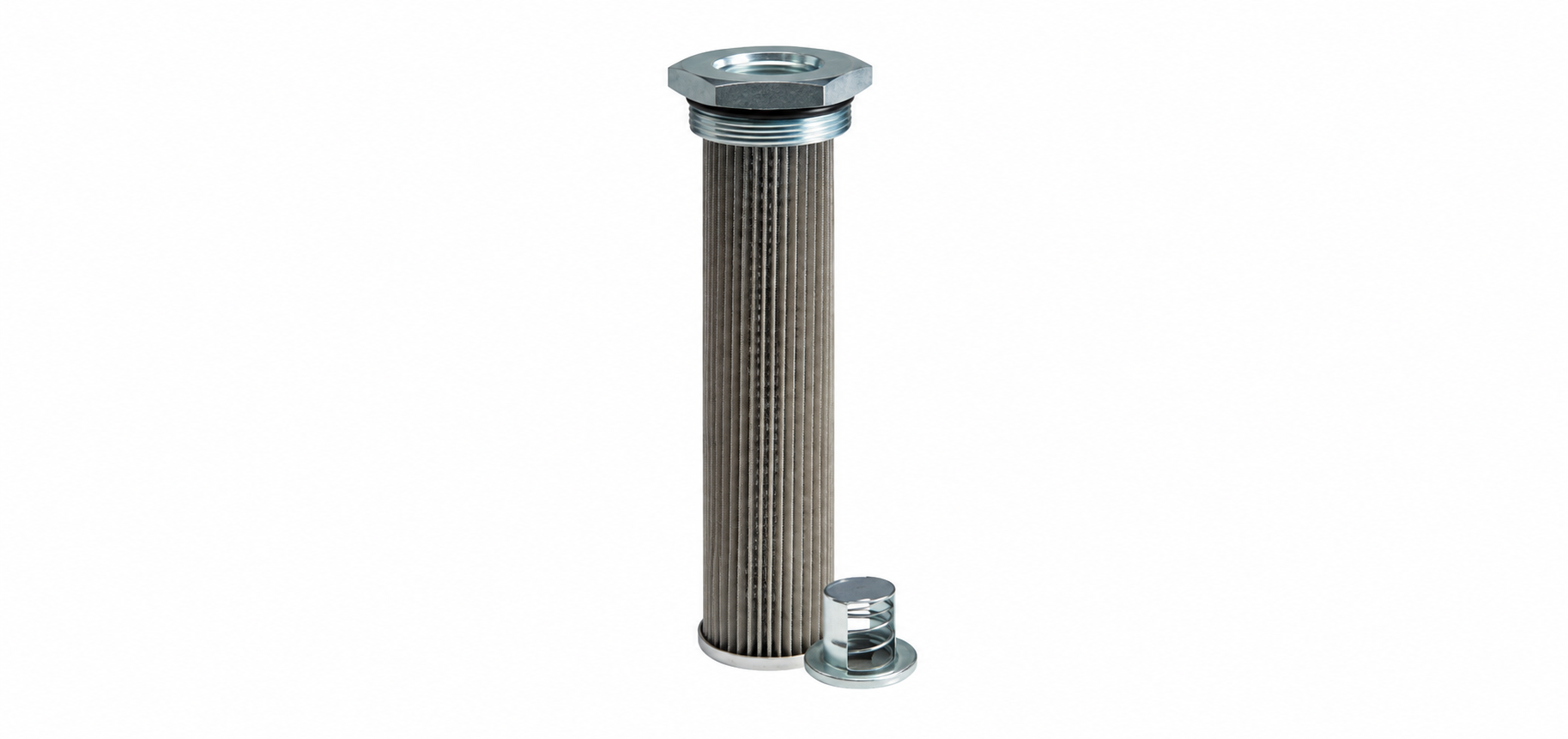
SAE Tank Mount Suction Strainer

Tank mount suction strainers install through the top of the reservoir, with the suction tube extending down below the fluid line while the connection bushing stays accessible from outside the tank. That external access is the main reason to choose a tank mount design over an in-tank strainer: it can be pulled for cleaning or replacement without draining the reservoir. OFCO manufactures tank mount suction strainers in nylon and metal, in NPT, SAE, hose barb, and male-to-male connection styles for hydraulic, lubrication, and fluid power systems.

How Tank Mounted Hydraulic Strainers Work

A tank mount suction strainer threads or bolts into a port in the reservoir top, with the strainer body and pleated screen hanging down into the fluid below. Because that connection sits at the tank’s exterior instead of fully submerged, the bushing can be unscrewed, and the element lifted straight out for inspection or cleaning, without opening up or draining the tank itself. The tradeoff against an in-tank design: a bit more hardware penetrating the reservoir, in exchange for a strainer that’s easier to reach and service on a normal maintenance schedule.

Nylon Tank Mount Suction Strainers

Of OFCO’s tank mount lines, the hose barb style is the only one available with a nylon fitting, alongside aluminum and steel options. The one-piece nylon design keeps the cost down and pairs naturally with soft tubing, which is part of why it shows up often in first-stage OEM equipment builds rather than fixed industrial installs. Like OFCO’s metal tank mount suction strainers for reservoirs, the hose barb line uses an epoxy-bonded stainless steel screen and a perforated support tube, so the lighter nylon fitting doesn’t come at the cost of screen durability. A low-pressure bypass valve is available on this line as well.

Metal Tank Mount Suction Strainers

OFCO’s NPT, SAE, and male-to-male tank mount suction strainers are all built around a cast iron or plated steel bushing, so they hold up to more pressure and rougher handling than a nylon fitting is meant for. 

Each uses the same epoxy-bonded stainless steel pleated screen and perforated support tube as the nylon line, but in a housing rated for tougher duty. These are the usual choice for hydraulic reservoir suction strainers on stationary industrial equipment, where the connection point sees more wear over the life of the machine than it typically would on a mobile unit.

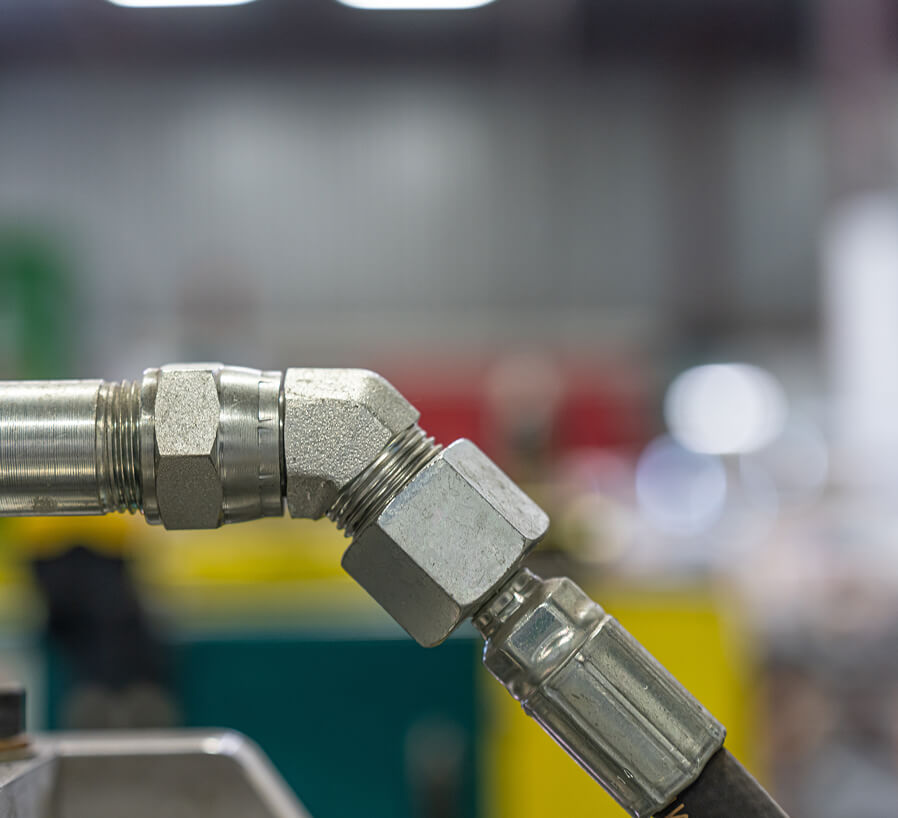
Metal SAE and NPT threaded hydraulic fittings and elbow connections used on tank mount suction strainers

Let's Talk About Your Tank Mount Application

Whatever connection style your reservoir calls for, OFCO’s team can help match the right tank mount strainer to your system. We’ll be happy to provide a solution, whether that’s an off-the-shelf part or something custom-fabricated to your specs. Give us a shout today!

Tank Mount Suction Strainer FAQs

Does installing a tank mount suction strainer mean cutting a new opening in the reservoir?

Not usually. It threads or bolts into an existing NPT or SAE port already machined into the tank top. If your reservoir doesn’t have a port sized for a standard part, OFCO can work from your drawing to build a bushing or adapter that fits your existing hardware.

What's the difference between a tank mount suction strainer and a return line strainer?

A tank mount suction strainer (or, more simply, a tank suction strainer) sits on the inlet side, ahead of the pump, and catches a contaminant before it’s drawn in. A return strainer, which OFCO also manufactures, sits on the return line and catches wear debris generated inside the system, such as particles from cylinders or valves, before that fluid re-enters the reservoir. Most well-designed hydraulic systems use both.

Are tank mount suction strainers suitable for mobile equipment, or only stationary tanks?

Both, depending on the connection style. Hose barb tank mount strainers are commonly specified for mobile equipment and OEM builds because they pair well with soft tubing and a more forgiving assembly process. NPT, SAE, and male-to-male tank mount strainers see more use on stationary industrial reservoirs, where a threaded or O-ring connection into a fixed tank top is the norm.