888-354-0291 740-622-3307
111 North 14th St • PO Box 218 • Coshocton, OH 43812

In-Tank Mount Suction Strainers

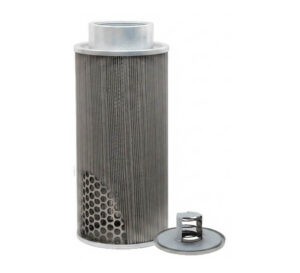
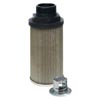
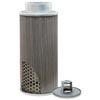
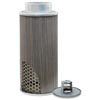
Exploded view of in-tank suction strainer showing pleated mesh screen, perforated support tube, and stainless steel cap with spring

In-tank suction strainers thread directly onto the pump’s suction line inside the reservoir, sitting fully below the fluid surface with no connection head above the tank wall. Where reservoir space is tight, plumbing needs to stay simple, or a submerged suction strainer has to cover more flow than one tank mount unit can handle, this is usually the more practical configuration. OFCO manufactures in-tank suction strainers in nylon and plated steel, with mesh and flow options spanning mobile equipment up through 400 GPM industrial systems.

How In-Tank Hydraulic Strainers Work

An in-tank suction strainer threads onto the suction pipe where it enters the reservoir, so the body sits below the minimum fluid level rather than mounting through the tank wall. Fluid passes through a pleated wire-cloth screen, backed by a perforated support tube, before reaching the pump inlet. Because in-tank hydraulic strainers have no head or gasket penetrating the reservoir, there’s less hardware to leak. The tradeoff: a simpler, lower-profile install, but servicing means opening the reservoir rather than reaching the strainer from outside.

Nylon In-Tank Suction Strainers

OFCO’s P7 Series covers nylon in-tank suction strainers in male and female NPT connections, sized to match standard hydraulic suction lines for a wide range of flow rates. The hex nut cap makes installation and removal straightforward, and nylon keeps cost and weight down versus a metal equivalent.

Where corrosion matters more than temperature range, such as water or coolant service, OFCO’s all-nylon strainers are molded in one piece rather than pairing a nylon cap with a metal core. Every in-tank hydraulic suction strainer in the nylon lineup is available with an optional low-pressure bypass valve, so a loading screen doesn’t starve the pump before its next service.

Metal In-Tank Suction Strainers

When nylon can’t handle the temperature, flow, or structural load, OFCO’s H7 Series provides plated steel in-tank suction strainers in male and female NPT connections, built for standard hydraulic suction lines. Stainless steel pleated wire cloth is epoxy-bonded to the cap and backed by a perforated support tube, so the screen holds up under load instead of collapsing. When one H7 unit can’t cover the flow, OFCO’s Model OS Series steps up to larger-diameter bodies for high-volume systems, in the same plated steel construction with the same bypass valve option. OFCO carries both the Model “OS” 5.9″ and the Model “OS” 8.1″.

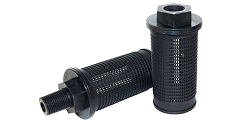
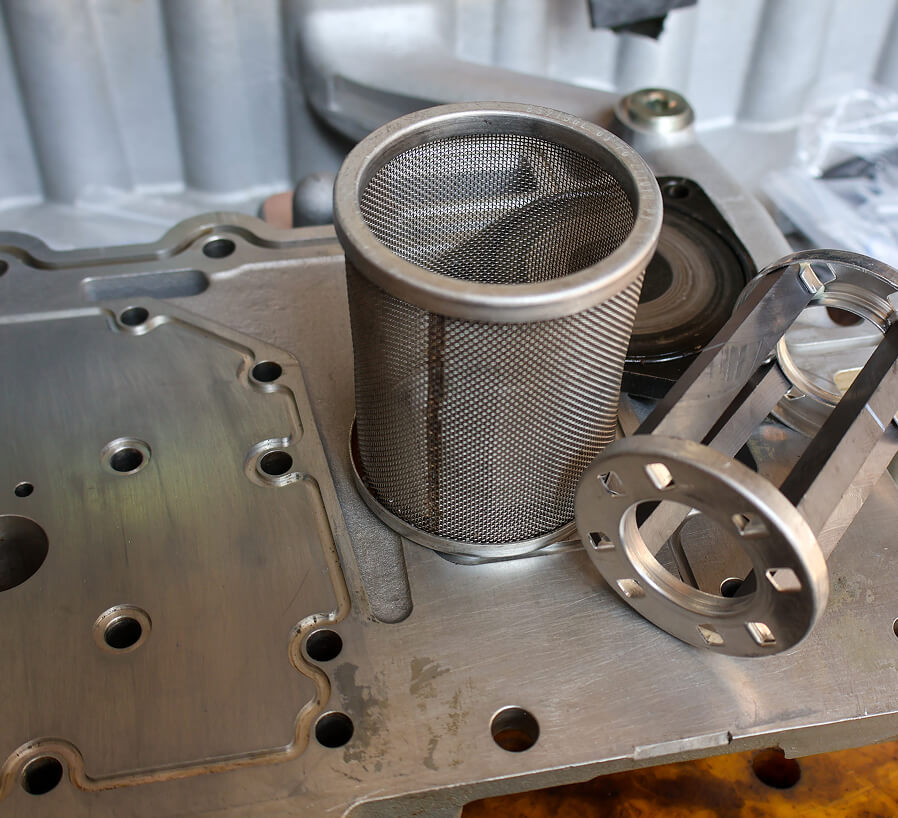
Metal in-tank suction strainer installed in hydraulic pump assembly, showing fine mesh screening and threaded connection

Selecting the Right Submerged Suction Strainer for Your Application

A few factors determine which strainer fits your system:

  • Flow rate at operating viscosity, not just rated GPM. Cold fluid is thicker at startup, which raises pressure drop across the screen.
  • Mesh size, matched to your pump manufacturer’s minimum for inlet protection. OFCO offers several standard mesh options for its in-tank lines.
  • NPT size and gender, matched to your existing suction pipe.
  • Housing material. Nylon costs and weighs less; plated steel handles higher temperatures and heavier loads.
  • Bypass valve. A low-pressure relief valve keeps fluid moving to the pump if the screen loads up between service intervals.

Talk to Ohio Fabricators About Your In-Tank Application

Whether you need an off-the-shelf H7, P7, or OS Series strainer, or a custom-fabricated unit sized to your reservoir and flow rate, OFCO’s team can help match the right part number to your system. Give us a call, and let’s discuss.

In-Tank Suction Strainer FAQs

Can an in-tank suction strainer be serviced without draining the reservoir?

Not easily. The element sits below the fluid line, so servicing it means opening the reservoir and pulling it out, usually with the fluid level dropped first. If frequent access without draining matters more than a low profile, a tank mount design is the better fit.

Is the bypass valve necessary, or can I leave it off?

It’s optional. Skipping it is fine on equipment with short, closely watched service intervals. Where an unnoticed clogged screen would starve or damage the pump, a bypass valve is worth specifying so fluid keeps flowing until the next cleaning.

Will an in-tank strainer hold up with fire-resistant or biodegradable hydraulic fluid?

OFCO’s plated steel in-tank strainers are rated for phosphate ester and water-glycol fire-resistant fluids, in addition to standard petroleum-based fluid. Confirm compatibility with OFCO directly for less common fluids, since seal and bonding materials vary by construction.

Does an in-tank suction strainer double as a foot valve or check valve?

No. A suction strainer filters particulate; it doesn’t hold prime or block backflow when the pump shuts off. A system that loses prime between cycles needs a separate check valve or foot valve, not something the strainer provides.