888-354-0291 740-622-3307
111 North 14th St • PO Box 218 • Coshocton, OH 43812

Hydraulic Tank Breathers

Filler Breather – Threaded Style

OFCO has manufactured hydraulic filtration components in Coshocton, Ohio, for more than 75 years. Our hydraulic tank breathers come in threaded, bayonet, and side-mount configurations for fixed and mobile equipment. Every unit is built under an ISO 9001:2015-certified quality management system, and a large share of what we make is custom, fabricated to a customer’s drawing rather than pulled from a catalog. Replacing an existing unit? The parts cross-reference guide will match an incumbent part number to an OFCO equivalent.

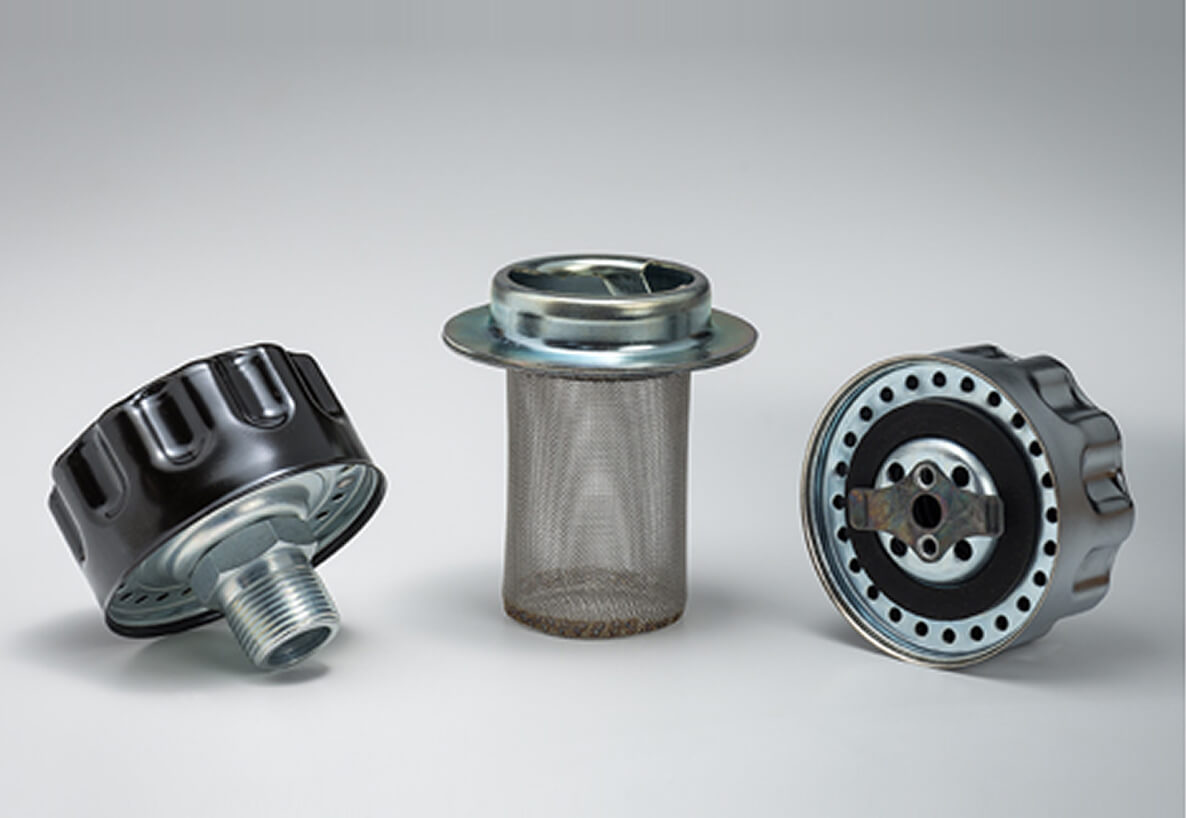
Types of Filler Breathers

The first decision is how the breather attaches to your tank, since that determines what kind of hole or fitting needs to be cut or welded in. OFCO makes hydraulic breathers in three mounting styles. No matter which one you choose, you get the same cap finishes, the same filter options, and the same 30 CFM airflow rating.

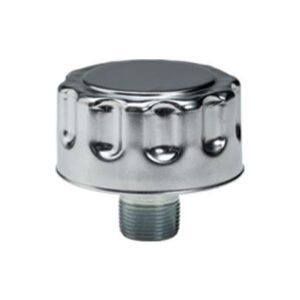
Threaded Style Filler Breather Filter

Threaded units screw straight into a port that already exists in the reservoir. If the tank was built with a threaded fill port, this is the least invasive option: no drilling, no flange, no new gasket surface to seal. OFCO offers threaded breathers for common NPT, BSPP, and SAE thread standards in both vented and pressurized versions. Because the entire unit comes out with a wrench, it’s also the simplest style to replace on equipment that’s already in service. 

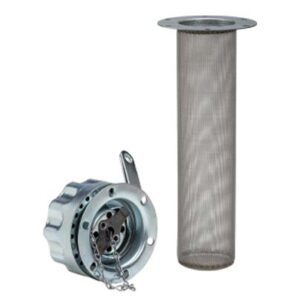
Bayonet Style Filler Breather Filter

Bayonet units mount to a flange on the reservoir and lock with a twist instead of a thread, so the cap comes off and goes back on by hand. That matters on equipment where fluid gets added often, or where the person doing it is wearing gloves. The flange also allows more design freedom than a threaded port: mounting hole patterns vary to suit the tank, locking tabs are available where the cap needs to stay put, and a fill basket can sit below the cap to strain fluid on its way in. Bayonet filler breathers come vented, pressurized, and non-vented.

Side Mount Filler Breather Filter

Sometimes there’s just no room on top of the tank. The fill point may sit under a deck plate, or the tank may be stacked or enclosed so only a side face is reachable. A side mount adapter moves the breather to the reservoir wall while still accepting a standard bayonet breather above it, so filtration and basket choices stay the same as any other bayonet build. OFCO’s side-mount assembly covers cases where top access isn’t an option.

Hydraulic Filler Breather Specifications

Spec sheets for hydraulic filler breathers list a handful of key attributes, and they tend to matter in roughly this order:

  • Airflow. Measured in CFM, this is how fast the unit can move air in and out of the tank. It needs to keep pace with how quickly fluid enters and leaves the reservoir; otherwise the breather itself becomes the bottleneck.
  • Micron rating. This describes how fine the filter media is. A lower number catches smaller particles but restricts airflow more. A higher number flows more freely but lets more through. There’s no universally “correct” choice, just the right trade-off for your environment.
  • Vented, pressurized, or non-vented. A vented cap equalizes the tank to atmospheric pressure. A pressurized cap holds slight positive pressure, which helps the pump draw fluid more easily. A non-vented cap seals the port completely, for systems where airflow is managed elsewhere.
  • Fitting or flange. This is how the breather connects to the tank. Thread size and standard for threaded units, or hole pattern for bayonet-style flanges.
  • Cap finish. Plating and coating options that affect corrosion resistance and appearance.

How to Choose the Right Filler Breather

Four questions settle most of it.

What does the tank give you to work with? An existing threaded port points to a threaded unit. A tank still on the drawing board, or one where the cap comes off several times a shift, suits a bayonet flange. A reservoir with no usable top face needs a side mount.

How fast does fluid move in and out? Match breather airflow to the volume the reservoir exchanges, then specify above that figure rather than at it, because media loads over its service life and restriction climbs with it. 

How dirty is the air around the machine? Open-air service in dust justifies finer media. A clean indoor plant on a low duty cycle can run coarser media and gain airflow headroom. A hydraulic reservoir breather only needs to be as fine as the environment demands.

Is this also the fill point and the level check? If fluid goes in through this port, a fill basket earns its place. If an operator checks level at the cap, a dipstick belongs on it. Both are easier to order than to retrofit.

Whether the cap should be vented, pressurized, or non-vented follows the circuit rather than the environment, and is worth confirming against the pump manufacturer’s inlet requirements before specifying.

Applications for Hydraulic Tank Breathers

The right mounting style usually comes down to the type of equipment and how it’s used:

  • Stationary power units (plants, wastewater treatment, chemical processing) typically have a machined port and a predictable service schedule, making them a good fit for threaded units.
  • Mobile and off-highway equipment (construction, mining, agriculture) gets filled in the field, deals with vibration and impact, and often has a crowded tank top: better suited to bayonet or side mount styles.
  • Mobile equipment also faces conditions a stationary tank never sees: tilting on a grade, changing dust levels, and fill-ups wherever the machine happens to be. This is where small options make a big difference, like a retaining chain so the cap doesn’t end up in the dirt, or a fill basket for pouring straight from a jug.
  • Non-standard tanks are common, not exceptional. A large share of OFCO’s business is custom-fabricated parts. OFCO builds to customer drawings and performance specs from Coshocton, Ohio, and offers a parts cross-reference guide to help match an existing part to an OFCO equivalent.

Not Sure Which Breather Fits Your Tank?

Tell us about your reservoir, flow rate, and operating environment. We’ll help you pick the right mounting style, filter rating, and options.

Hydraulic Tank Breather FAQs

Does a hydraulic reservoir have to have a breather, or can the tank be sealed?

A conventional open-circuit reservoir has to exchange air. As fluid leaves the tank, internal pressure drops and without a vent path, the pump works against a partial vacuum at its inlet, which raises cavitation risk. Sealing the port only works when air volume is supplied and regulated elsewhere in the system, which is what non-vented caps are built for. For a standard open reservoir, the question isn’t whether to vent, but how finely to filter what comes in.

How do I size a breather to my system?

Convert the flow the reservoir exchanges into cubic feet per minute. There are 7.48 gallons in a cubic foot, so a reservoir exchanging 60 GPM needs roughly 8 CFM of breather capacity, and one exchanging 150 GPM needs roughly 20 CFM. Specify above the calculated figure, because media loads over its service life and restriction climbs with it. Then check that number against the airflow rating on the spec sheet for the style you’re considering.

Will a filler breather keep water out of the hydraulic fluid?

Not on its own. A particulate breather stops airborne solids and will block liquid water splashing at the port, but it does not remove humidity from the air passing through it. Vapor drawn in on a humid day still condenses inside the tank as the fluid cools overnight. If moisture is the problem being solved, raise it during specification so the reservoir design accounts for it rather than leaving it to the breather.

Do we need a fill basket if we top off through the breather port?

If new fluid goes in through that port, yes. A basket strains debris out of the fluid during the fill, which is a common contamination path on equipment serviced in the field from a jug or a hand pump. It does nothing for air exchange, so if the reservoir fills through a separate port and the breather only handles breathing, the basket does no work.