Types of Filler Breathers
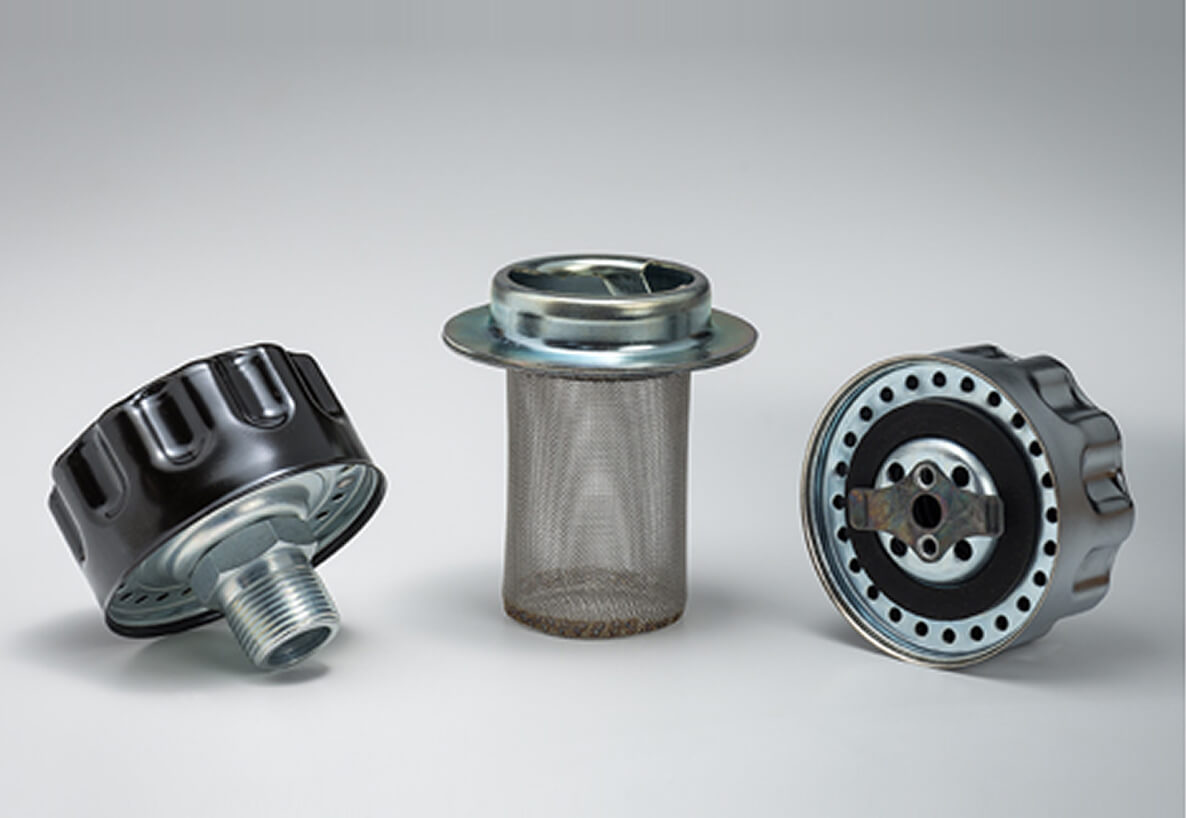
The first decision is how the breather attaches to your tank, since that determines what kind of hole or fitting needs to be cut or welded in. OFCO makes hydraulic breathers in three mounting styles. No matter which one you choose, you get the same cap finishes, the same filter options, and the same 30 CFM airflow rating.
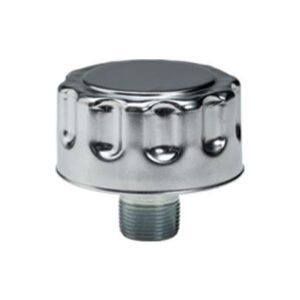
Threaded Style Filler Breather Filter
Threaded units screw straight into a port that already exists in the reservoir. If the tank was built with a threaded fill port, this is the least invasive option: no drilling, no flange, no new gasket surface to seal. OFCO offers threaded breathers for common NPT, BSPP, and SAE thread standards in both vented and pressurized versions. Because the entire unit comes out with a wrench, it’s also the simplest style to replace on equipment that’s already in service.
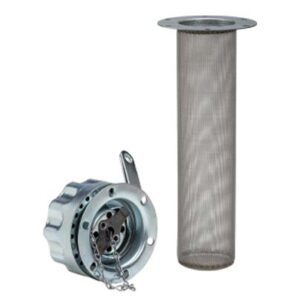
Bayonet Style Filler Breather Filter
Bayonet units mount to a flange on the reservoir and lock with a twist instead of a thread, so the cap comes off and goes back on by hand. That matters on equipment where fluid gets added often, or where the person doing it is wearing gloves. The flange also allows more design freedom than a threaded port: mounting hole patterns vary to suit the tank, locking tabs are available where the cap needs to stay put, and a fill basket can sit below the cap to strain fluid on its way in. Bayonet filler breathers come vented, pressurized, and non-vented.
Side Mount Filler Breather Filter
Sometimes there’s just no room on top of the tank. The fill point may sit under a deck plate, or the tank may be stacked or enclosed so only a side face is reachable. A side mount adapter moves the breather to the reservoir wall while still accepting a standard bayonet breather above it, so filtration and basket choices stay the same as any other bayonet build. OFCO’s side-mount assembly covers cases where top access isn’t an option.

 Cross Reference Guide
 Cross Reference Guide